- Acidity
- 6.5
- Aroma
- 3.4
- Flavor
- 5.2
- Sweetness
- 5.5
- Mouthfeel
- 2.7
- Country
- Honduras
- Region
- Comayagua
- Farm
- Las Tapias
- Variety
- Parainema
- Process
- Natural
- Altitude
- 1200 m
- Harvest
- —
- Lot size
- 30.02 kg
- Moisture
- —
- Density
- —
- TUS uniformity
- 36%
Panel cupping publishes here — preview shows the format
Cupping verifies — it doesn’t define. The engine’s chemistry-based prediction stands on its own; the panel confirms it at the table.
Las Tapias Parainema Natural shows a clear acidity-forward character. Expect a quieter mouthfeel presence.
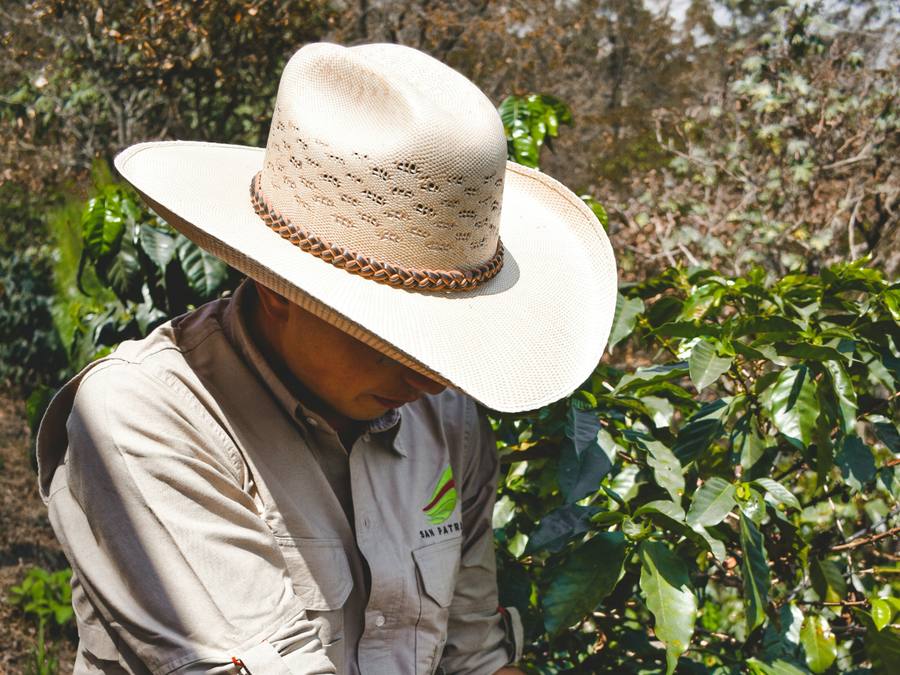
Arturo Kilgore farms Las Tapias at 1200 m in Comayagua, Honduras.
NIR-derived indices · EGGSTONE engine
Predicted sensory axes · 0–10
Acid load sits near the comparison — enough lift without dominating.
Average aromatic feedstock — room to lift florals through Maillard control.
Flavor complexity tracks the comparison.
Sweetness feedstock sits near the comparison.
A light mouthfeel — position it as transparency, strongest in filter.
Predicted by the uncrack engine from this lot’s NIR chemistry · v2 tier model · probabilities sum to 100%
Bean-to-bean, from 96 readings (3 scans × 32) · higher = more uniform
Roasting directions from this lot's chemistry · percentiles against the full green coffee library
- 01Fresh, fruit-like sweetness: fructose
Abundant fructose points toward berry and tropical-fruit character.
Data rationale Fructose 87th percentile · Sweetness potential 68th percentile
- 02A rounded body supports the sweetness: polysaccharides
Polysaccharides contribute weight and richness on the palate, supporting the fruit-like sweetness.
Data rationale Polysaccharides 78th percentile
- 03Aroma, sweetness and savory depth: trigonelline
Trigonelline is above the library average, contributing to a broad range of aromas, sweetness and savory depth.
Data rationale Trigonelline 75th percentile
- 04A smooth finish and an active response
Low chlorogenic acids suggest less tendency toward bitter or smoky character in the source analysis. High water activity points toward active flavor development; measured heat application should help keep the fruit character well defined.
Data rationale Chlorogenic acids 8th percentile · Water activity 75th percentile
Percentiles rank this lot against the full green coffee reference library (about 2,300 coffees); Taste Potential values are percentile rankings, not cupping scores. These are directions suggested by the data — design and validate the actual profile on your roaster, for your target cup.